
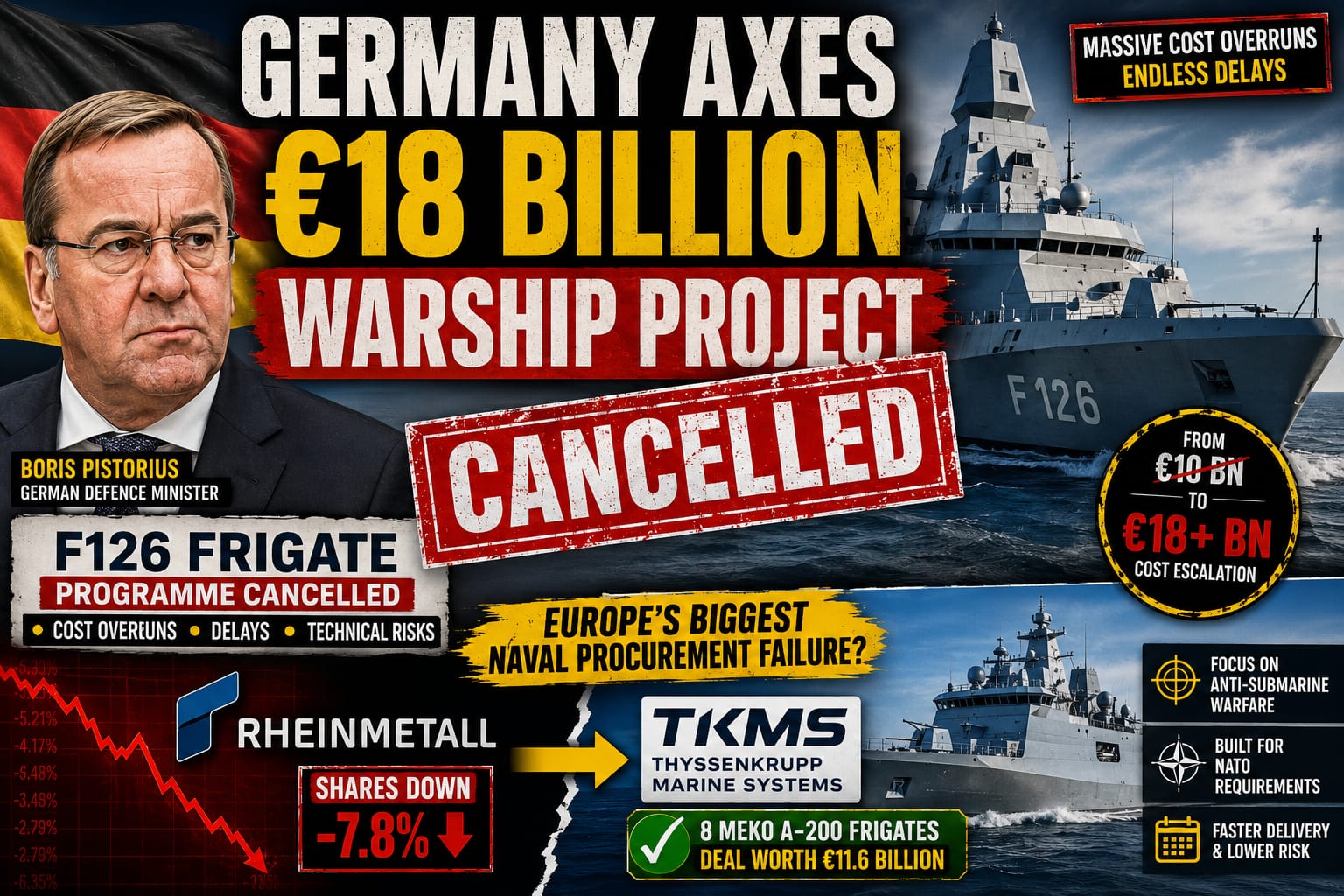
Berlin, June 24: Germany has scrapped its ambitious F126 frigate programme, one of the largest naval procurement projects in the country’s post-war history, citing escalating costs, repeated delays and growing technical risks. The decision marks a major setback for Germany’s naval modernisation plans and deals a significant blow to defence giant Rheinmetall.
Costs Nearly Double Original Estimates
The F126 programme was initially expected to cost around €10 billion for six advanced multi-role frigates. However, according to Germany’s Defence Ministry, projected costs had surged beyond €18 billion due to delays, contractor issues and technical challenges. Officials said continuing the project would expose taxpayers to unacceptable financial and operational risks.
Biggest German Warship Project in Decades
The F126 frigates were designed to become the largest warships commissioned by the German Navy since World War II. Led initially by Dutch shipbuilder Damen Naval, the programme faced years of delays, software integration problems and disputes between contractors and government agencies. The first vessel’s delivery had reportedly slipped well into the next decade.
Berlin Switches to Smaller MEKO Frigates
Instead of continuing with the troubled F126 project, Berlin has decided to procure eight MEKO A-200 frigates from Thyssenkrupp Marine Systems (TKMS). The new acquisition is expected to cost approximately €11.6 billion and will focus heavily on anti-submarine warfare capabilities, a growing NATO priority amid heightened tensions in Europe.
Blow to Rheinmetall
The cancellation is a major setback for Rheinmetall, which had hoped to take over the programme after previous contractor difficulties. The company viewed the F126 contract as one of its largest potential naval projects. Following reports of the cancellation, Rheinmetall shares fell sharply while TKMS shares rose on expectations of securing the replacement contract.
Wider Questions for European Defence Industry
Analysts say the collapse of the F126 programme highlights persistent challenges in European defence procurement, including cost overruns, industrial coordination issues and lengthy development timelines. The decision also comes amid broader concerns about delays affecting several major European defence projects.
The move reflects Germany’s growing emphasis on acquiring proven, off-the-shelf military platforms rather than pursuing highly customised programmes that risk delays and budget overruns.