
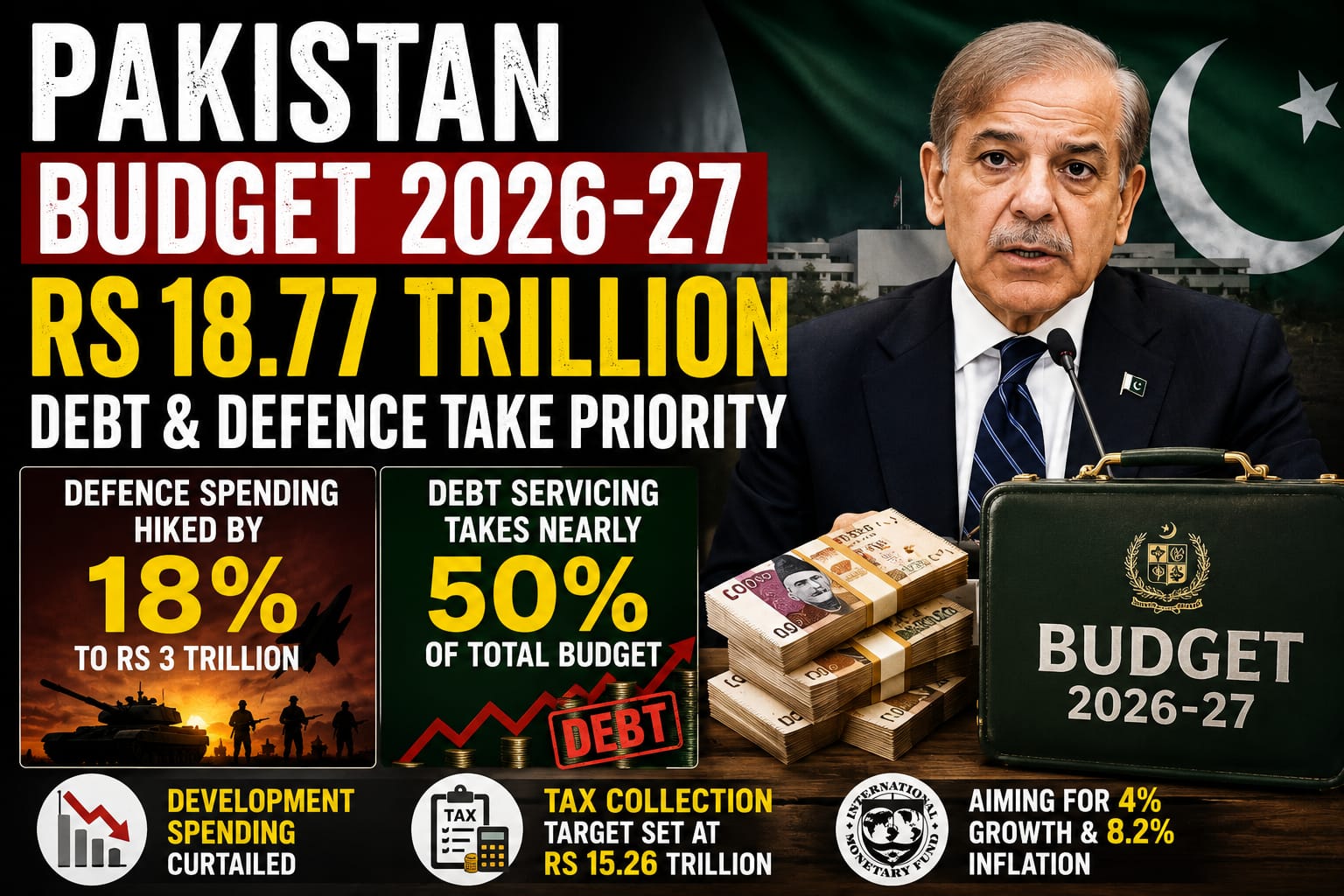
Islamabad, June 26: Pakistan’s National Assembly has approved the federal budget for the financial year 2026–27, with a total outlay of Rs 18.77 trillion, reflecting Islamabad’s continued focus on debt servicing, defence and meeting International Monetary Fund (IMF) commitments. The budget allocates a record Rs 3 trillion for defence while a substantial share of government expenditure has been earmarked for debt repayments, leaving limited fiscal space for development and welfare initiatives.
Debt Servicing Accounts for Largest Share
Debt servicing remains the single biggest expenditure in Pakistan’s budget, consuming nearly half of the total federal outlay. With external and domestic liabilities continuing to mount, the government has prioritised interest payments to maintain macroeconomic stability and comply with IMF programme conditions. Analysts say the heavy debt burden continues to constrain Islamabad’s ability to increase spending on infrastructure, healthcare, education and social welfare.
Defence Allocation Increased by 18 Per Cent
The government has allocated approximately Rs 3 trillion for defence in FY 2026–27, representing an 18 per cent increase over the previous fiscal year. Finance Minister Muhammad Aurangzeb said the enhanced allocation reflects Pakistan’s security requirements amid a volatile regional environment. The increase comes following heightened military tensions with India and ongoing security challenges along the country’s western border.
Development Spending Curtailed
While defence spending has risen significantly, federal development expenditure has been restricted to around Rs 1 trillion, highlighting the government’s emphasis on fiscal consolidation. Officials said the budget seeks to strike a balance between maintaining national security, meeting IMF targets and controlling inflation. However, economists argue that reduced development spending could slow infrastructure growth and job creation.
IMF Targets Shape Fiscal Strategy
The budget aims to achieve 4 per cent economic growth and 8.2 per cent inflation during the coming fiscal year while maintaining compliance with Pakistan’s ongoing $7 billion IMF programme. To boost revenue, the government has set an ambitious tax collection target of Rs 15.26 trillion, relying heavily on petroleum levies and improved tax compliance. Analysts caution that much of the additional tax burden is likely to fall on salaried individuals and existing taxpayers, as politically influential sectors such as agriculture and retail remain largely outside the tax net.
Balancing Security and Economic Challenges
The 2026–27 budget underscores Pakistan’s difficult fiscal choices as it attempts to balance national security requirements, rising debt obligations and economic reforms. While increased defence allocations reflect Islamabad’s strategic priorities, experts believe sustained economic recovery will depend on broadening the tax base, reducing debt dependence and creating greater fiscal space for development and public welfare in the years ahead.