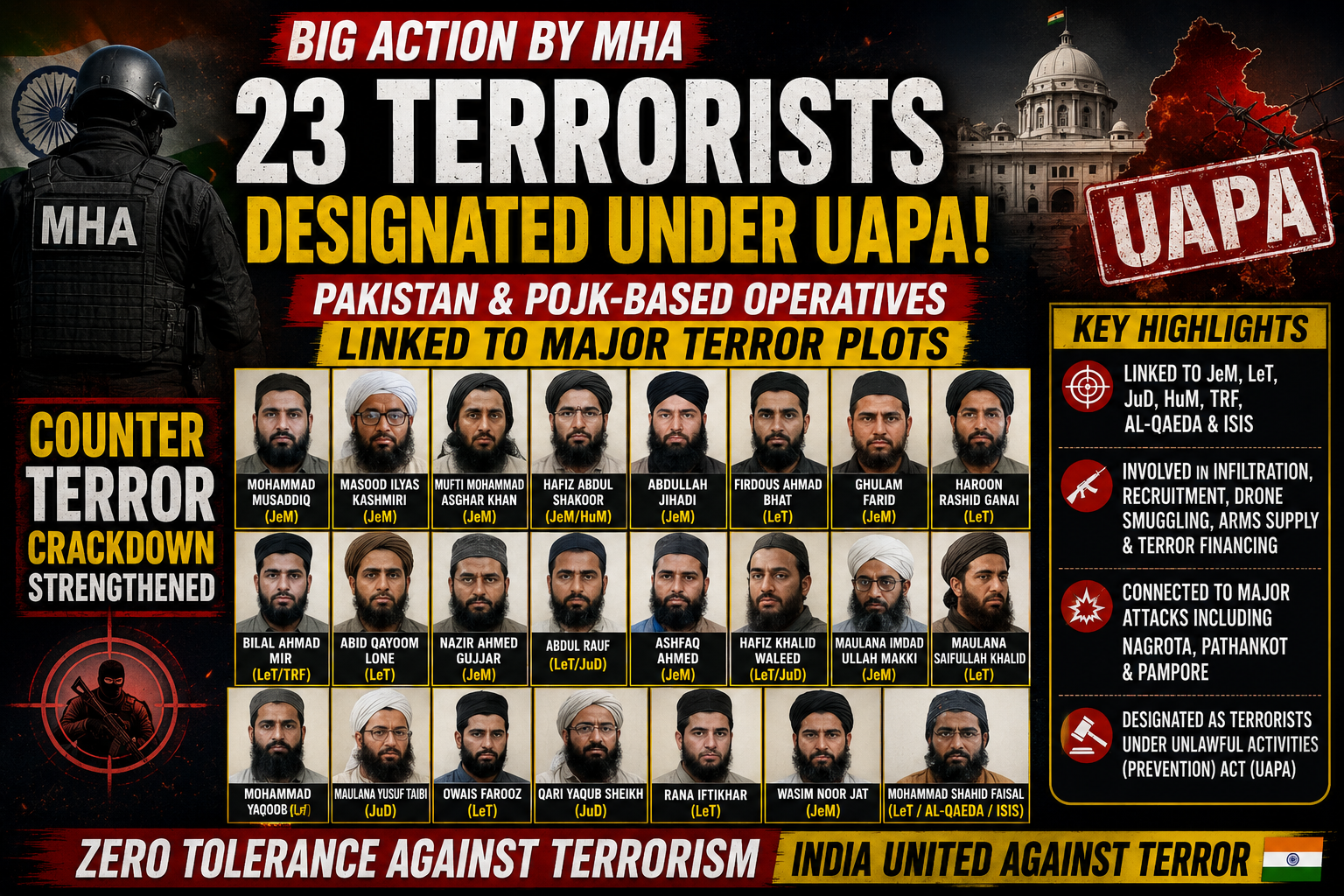
New Delhi, July 3: In a significant move aimed at strengthening India’s counter-terror framework, the Ministry of Home Affairs (MHA) has designated 23 Pakistan- and Pakistan-occupied Jammu & Kashmir (PoJK)-based individuals as terrorists under the Unlawful Activities (Prevention) Act (UAPA). The newly designated individuals are alleged to be associated with terrorist organisations including Jaish-e-Mohammed (JeM), Lashkar-e-Taiba (LeT), Jamaat-ud-Dawa (JuD), Hizbul Mujahideen (HuM), The Resistance Front (TRF), Al-Qaeda, and ISIS.
The MHA stated that the individuals have allegedly played key roles in facilitating cross-border terrorism, infiltration, recruitment, terror financing, propaganda, logistics, drone-based arms smuggling, and planning attacks against India.
Senior Terror Operatives Named
Among those designated is Mohammad Musaddiq (JeM), who is alleged to have coordinated reconnaissance of the Ram Mandir in Ayodhya and the RSS headquarters in Nagpur, besides being involved in drone-based weapons smuggling into India.
Masood Ilyas Kashmiri (JeM) has been accused of coordinating infiltration attempts across the Line of Control (LoC) and recruiting terrorists for operations in Jammu and Kashmir.
The MHA has also designated Mufti Mohammad Asghar Khan (JeM), who has been described as the outfit’s military wing chief and is alleged to have masterminded the 2016 Nagrota Army camp attack.
Another accused, Hafiz Abdul Shakoor (JeM/HuM), has been alleged to have facilitated infiltration for the Nagrota attack, while Abdullah Jihadi (JeM) is accused of managing terrorist launch pads and infiltration routes into North Kashmir.
Lashkar-e-Taiba Leaders Included
Several senior Lashkar-e-Taiba (LeT) operatives also feature in the notification.
These include Firdous Ahmad Bhat, an alleged launch commander responsible for infiltration and recruitment; Haroon Rashid Ganai, accused of recruiting Kashmiri youth and supplying arms; Bilal Ahmad Mir, allegedly responsible for cross-border weapons logistics; and Abid Qayoom Lone, who is accused of terror financing and narcotics smuggling.
The list also includes Abdul Rauf, a senior LeT/Jamaat-ud-Dawa leader alleged to be responsible for global fundraising, and Hafiz Khalid Waleed, identified as Hafiz Saeed’s son-in-law, who is accused of planning the 2016 Pampore terror attack.
Links to Major Terror Attacks
The MHA notification names Ashfaq Ahmed (JeM) as being allegedly involved in the conspiracy behind the 2016 Pathankot Air Force Station attack.
Maulana Imdad Ullah Makki (JeM) has also been accused of coordinating Jaish-e-Mohammed’s activities during the Pathankot operation.
Other individuals such as Nazir Ahmed Gujjar and Wasim Noor Jat have been accused of coordinating drone-based weapon deliveries into Jammu and Kashmir.
Terror Financing and Propaganda
The designation also targets individuals allegedly responsible for sustaining terrorist infrastructure through financial and logistical support.
These include Mohammad Yaqoob, Maulana Yusuf Taibi, Qari Yaqub Sheikh, and Rana Iftikhar, who are accused of managing organisational affairs, fundraising, logistics and financial support for Lashkar-e-Taiba and Jamaat-ud-Dawa.
The MHA has also designated Maulana Saifullah Khalid, describing him as a senior LeT political and propaganda leader.
Indian National on List
Among the 23 designated terrorists is Owais Farooz, an Indian national who, according to the MHA, travelled to Pakistan and allegedly joined Lashkar-e-Taiba.
Another individual, Mohammad Shahid Faisal, has been accused of maintaining links with LeT, Al-Qaeda and ISIS, while allegedly engaging in online radicalisation, recruitment and multiple terror conspiracies.
Strengthening Counter-Terror Framework
The latest designations empower Indian authorities to initiate legal proceedings under the UAPA, freeze assets, restrict financial transactions, and intensify action against individuals accused of supporting terrorism from across the border.
The move is part of India’s broader strategy to dismantle terrorist networks, curb cross-border infiltration, disrupt terror financing, and strengthen national security.