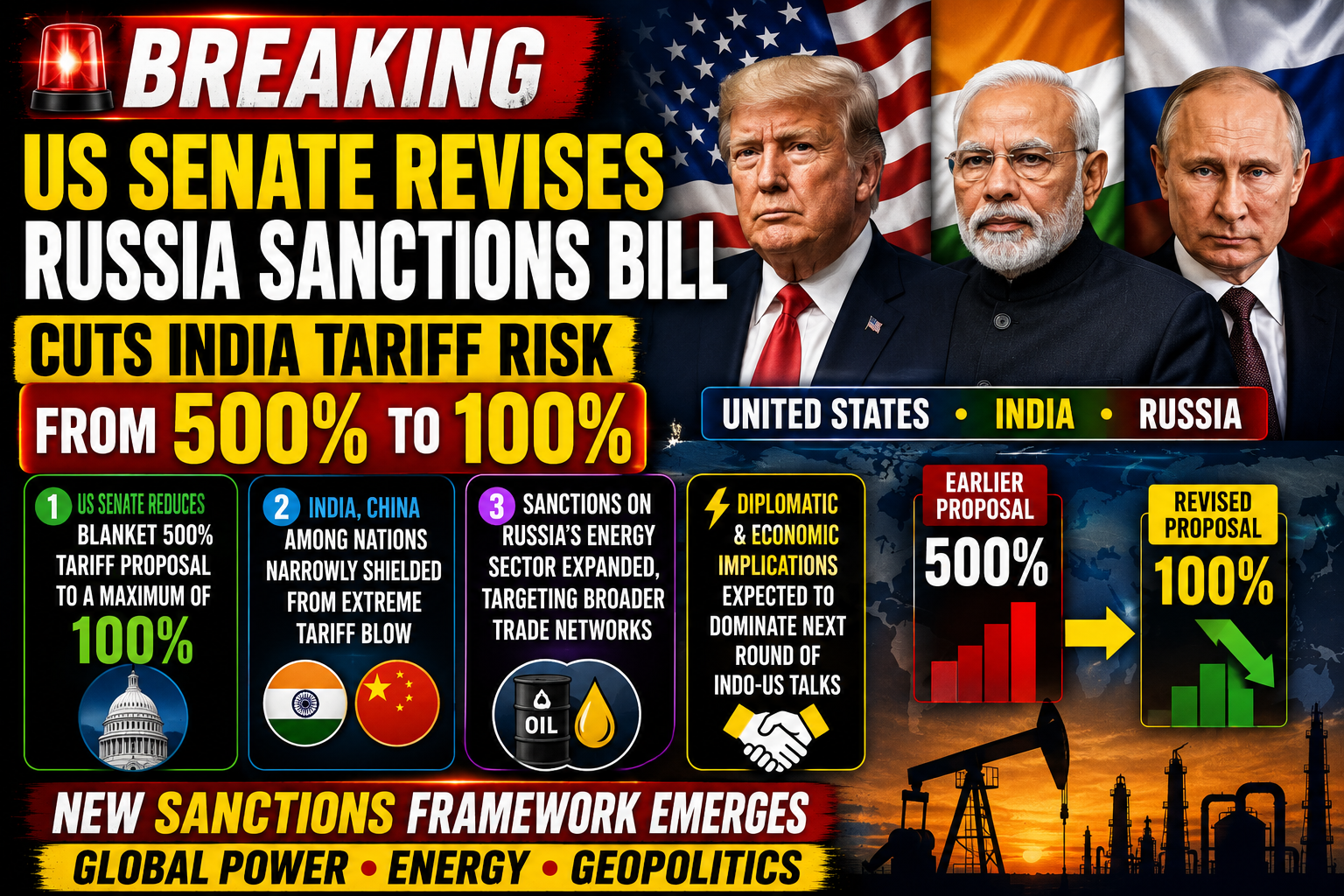
Washington D.C., July 14: The United States Senate has revised a proposed sanctions bill targeting Russia, significantly reducing the maximum tariff that could be imposed on countries purchasing Russian oil and other energy products. Under the revised proposal, the previously discussed 500% tariff has been lowered to a maximum of 100%, easing concerns for major importers such as India and China.
The amendment comes as lawmakers seek to increase pressure on Moscow while balancing the potential impact on global trade and strategic partners.
Major Change in Tariff Proposal
The earlier version of the bill proposed imposing tariffs of up to 500% on countries continuing to import Russian oil.
However, under the revised draft:
- The maximum tariff has been reduced to 100%.
- The measure would primarily target the five largest buyers of Russian energy exports.
- The revised framework is aimed at maintaining pressure on Russia while reducing the risk of severe disruption to international markets.
Relief for India and Other Importers
The change is being viewed as a significant relief for countries such as India and China, which have continued purchasing discounted Russian crude oil since the start of the Ukraine conflict.
While these countries remain within the broader scope of the proposed legislation, the reduction in the potential tariff substantially lowers the immediate economic risk compared with the original proposal.
Broader Sanctions on Russia
Alongside the tariff revision, the Senate proposal reportedly expands sanctions targeting Russia’s energy sector by:
- Tightening restrictions on energy-related transactions.
- Targeting broader trade and shipping networks linked to Russian exports.
- Increasing pressure on entities helping Russia bypass existing sanctions.
The measures are intended to further restrict Moscow’s revenue from energy exports.
Impact on India-US Relations
The revised proposal is expected to feature prominently in upcoming India-US diplomatic and economic discussions.
India has consistently maintained that its energy imports are guided by national energy security and economic interests while continuing to advocate dialogue and diplomacy to resolve the Russia-Ukraine conflict.
Bill Yet to Become Law
The sanctions proposal is still a legislative measure and has not yet become law. It must pass both chambers of the US Congress and receive presidential approval before taking effect.
Officials and analysts will continue to monitor further amendments as the legislation moves through the US legislative process.