
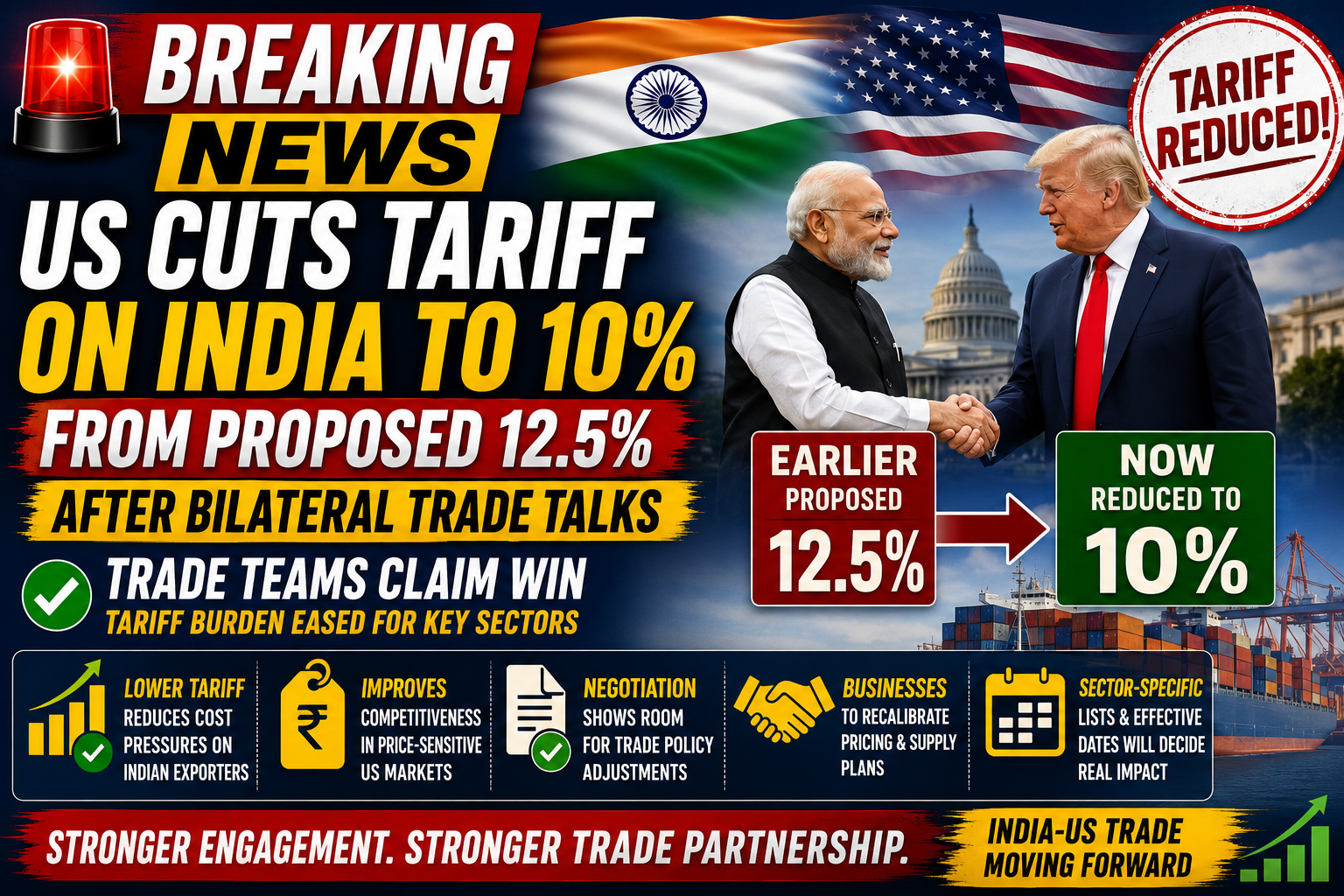
New Delhi/Washington: India has reportedly secured a reduction in the proposed US tariff on certain Indian exports following high-level bilateral trade negotiations, with the revised duty now set at 10%, down from an earlier proposed 12.5% for select product categories.
The reported revision is being viewed as a positive outcome of ongoing trade engagements between New Delhi and Washington and could provide relief to Indian exporters competing in the US market.
Relief for Indian Exporters
A lower tariff is expected to:
- Reduce cost pressures on Indian exporters.
- Improve the competitiveness of Indian products in the US market.
- Help businesses retain market share in price-sensitive sectors.
- Ease pricing challenges for exporters with existing supply contracts.
Industry representatives believe the reduction could benefit sectors that depend heavily on exports to the United States.
Outcome of Bilateral Negotiations
The reported revision follows a series of technical and high-level discussions between Indian and US trade officials.
Trade experts note that tariff proposals often undergo changes before implementation as negotiations continue, with both sides seeking to protect their economic interests while expanding bilateral trade.
Impact Depends on Final Notification
While the reduction to a 10% tariff is being welcomed, the actual impact will depend on:
- The final list of products covered.
- Sector-specific tariff schedules.
- The effective date of implementation.
- Any exemptions or special provisions included in the final notification.
Businesses are expected to review their pricing and supply chain strategies once the detailed notification is issued.
Boost to India-US Trade
The development comes as India and the United States continue efforts to strengthen economic cooperation and expand bilateral trade.
Analysts say the tariff revision demonstrates that sustained diplomatic and technical engagement can influence trade policy outcomes and help resolve differences through negotiation rather than escalation.
Both countries remain engaged on broader trade issues, with businesses closely monitoring further announcements that could affect exports, investments and supply chains.