
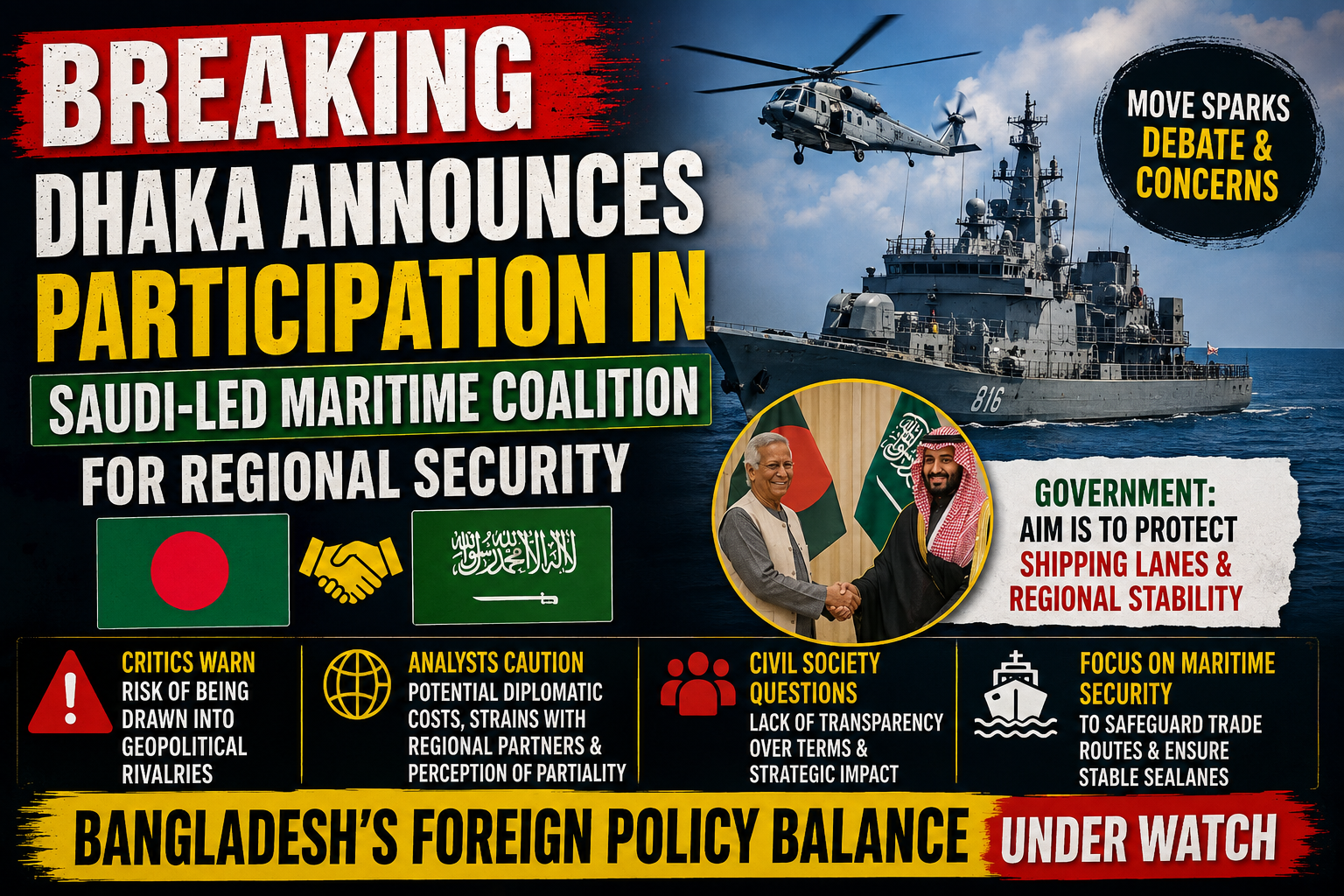
Dhaka: Bangladesh has announced that it will join the Saudi Arabia-led multinational maritime defence coalition, becoming one of the countries supporting the initiative aimed at protecting international shipping routes in the Red Sea, Bab el-Mandeb Strait and the Gulf of Aden. The coalition was announced by Saudi Arabia following a meeting attended by representatives from 43 countries and the European Union.
The decision places Bangladesh among the 14 countries that have formally backed the proposed maritime security framework, alongside nations including Saudi Arabia, Pakistan, Egypt, Turkey, Jordan, Djibouti, Somalia and Sudan.
Coalition Aims to Protect Global Shipping
According to Saudi Arabia, the coalition has been created to strengthen maritime security and ensure the safe movement of commercial and energy shipments through some of the world’s busiest sea lanes.
The proposed alliance will focus on:
- Protecting international shipping routes
- Enhancing maritime surveillance
- Intelligence sharing among member states
- Coordinated responses to maritime threats
- Safeguarding global energy supply routes
The initiative comes amid rising attacks on commercial vessels in the Red Sea region and growing security concerns linked to Yemen’s Houthi movement.
Bangladesh Explains Its Position
The Bangladesh government has maintained that its participation is intended to support freedom of navigation, maritime security and regional stability, consistent with its earlier statements condemning disruptions to international shipping and calling for the protection of lawful maritime trade.
Officials say Bangladesh’s participation is aimed at safeguarding sea lanes that are critical for international commerce rather than targeting any specific country.
Strategic Significance
The Red Sea, Bab el-Mandeb Strait and Gulf of Aden are among the world’s most important maritime trade corridors, carrying a substantial share of global oil and container traffic.
Any disruption in these waters can significantly impact:
- Global energy supplies
- International shipping
- Freight costs
- Supply chains
- World trade
Military analysts believe the coalition reflects increasing concern among regional countries over the security of these strategic waterways.
Regional and Domestic Reactions
The decision has attracted attention from strategic observers, with some analysts suggesting Bangladesh will need to carefully balance its foreign policy as regional geopolitical competition intensifies.
Others note that Dhaka has consistently pursued a policy of maintaining constructive relations with multiple regional and global partners while emphasising maritime security and uninterrupted international trade.
The long-term impact of Bangladesh’s participation will depend on how the coalition evolves and the scope of its future operations.