
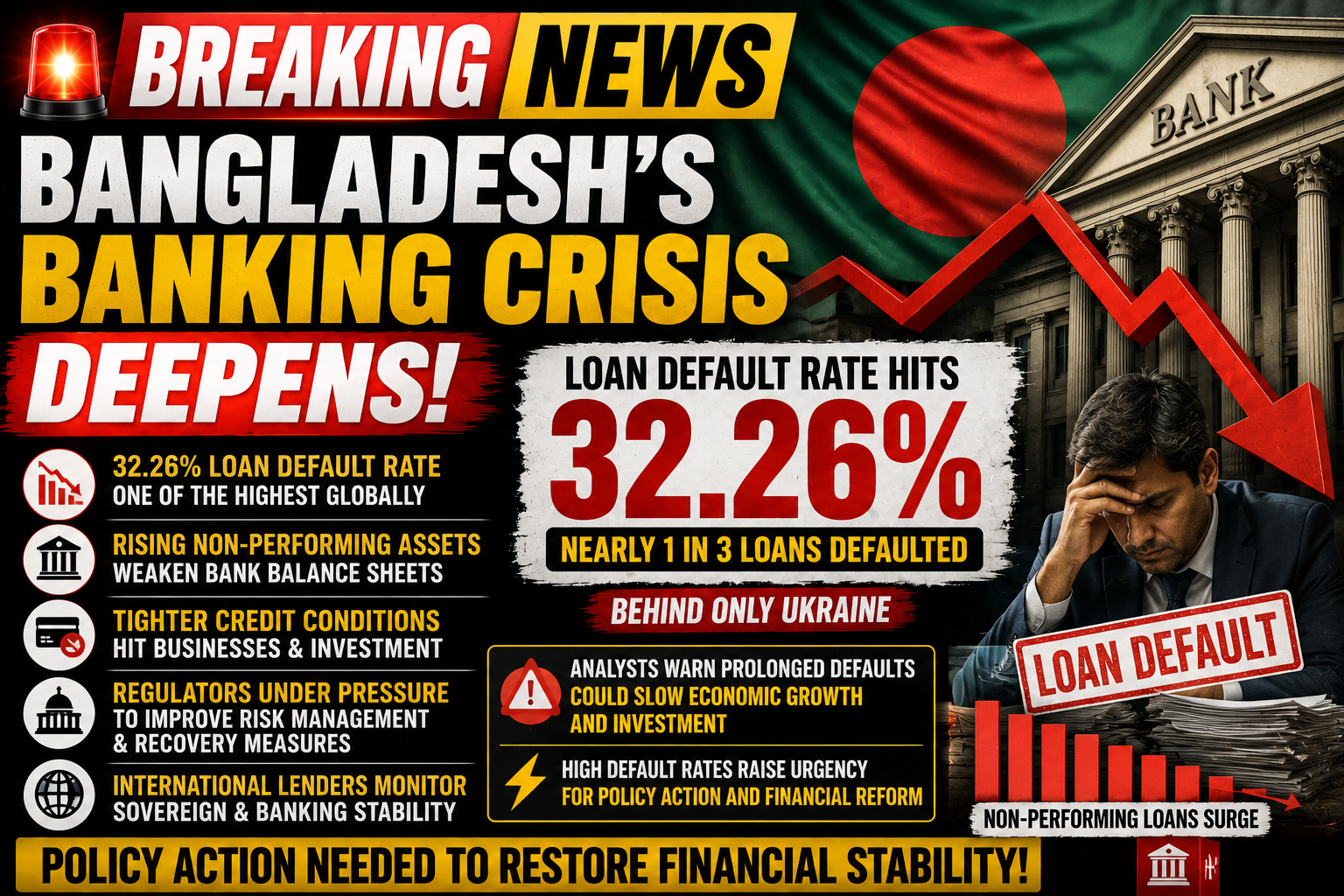
Dhaka, July 10: Bangladesh’s banking sector is facing one of its most severe financial crises, with nearly one in every three bank loans now classified as defaulted. According to the latest data, the country’s loan default rate has reached 32.26%, placing Bangladesh among the world’s worst-performing banking systems, behind only Ukraine.
The sharp rise in non-performing loans (NPLs) has raised serious concerns over the stability of the country’s financial sector and its impact on economic growth.
One in Three Loans in Default
The latest figures indicate that 32.26% of outstanding bank loans have turned into defaults, reflecting mounting financial stress across the banking sector. Such a high level of bad loans significantly weakens banks’ ability to lend, affecting businesses, industries and consumers alike.
Pressure on Banks
The surge in loan defaults has put tremendous pressure on banks, forcing many financial institutions to increase provisions for bad loans while tightening lending standards.
Banks are expected to become more cautious in extending fresh credit, particularly to sectors perceived as high-risk, potentially slowing investment and business expansion.
Concerns Over Economic Growth
Economists warn that persistently high default rates could reduce the availability of credit, discourage private investment and weigh on Bangladesh’s overall economic growth.
Higher non-performing assets also increase borrowing costs for businesses and weaken confidence in the financial system.
Regulators Face Growing Challenge
Bangladesh’s financial regulators are under increasing pressure to strengthen banking supervision, improve risk management practices and accelerate the recovery of bad loans.
Analysts say reforms in governance, transparency and corporate lending practices will be critical to restoring confidence in the banking sector.
Global Attention
The worsening situation is also being closely watched by international financial institutions, credit rating agencies and development lenders, as the health of Bangladesh’s banking system remains an important factor in assessing the country’s broader economic stability.
Experts believe sustained policy measures, stronger regulatory oversight and structural banking reforms will be essential to reduce default rates and restore confidence in Bangladesh’s financial sector.