New Delhi, July 3: One of South Asia’s most significant arms smuggling cases has once again come into focus after renewed discussion over the 2004 Chittagong arms haul—widely regarded as Bangladesh’s largest-ever seizure of illegal weapons. Investigators had concluded that the massive consignment was intended for insurgent groups operating in Northeast India, with several reports linking the shipment to Chinese-origin weaponry.
Massive Cache Seized at Chittagong
On the night of April 1–2, 2004, Bangladeshi security agencies intercepted a huge consignment of arms being unloaded at the Chittagong Urea Fertilizer Limited (CUFL) jetty near Chittagong Port.
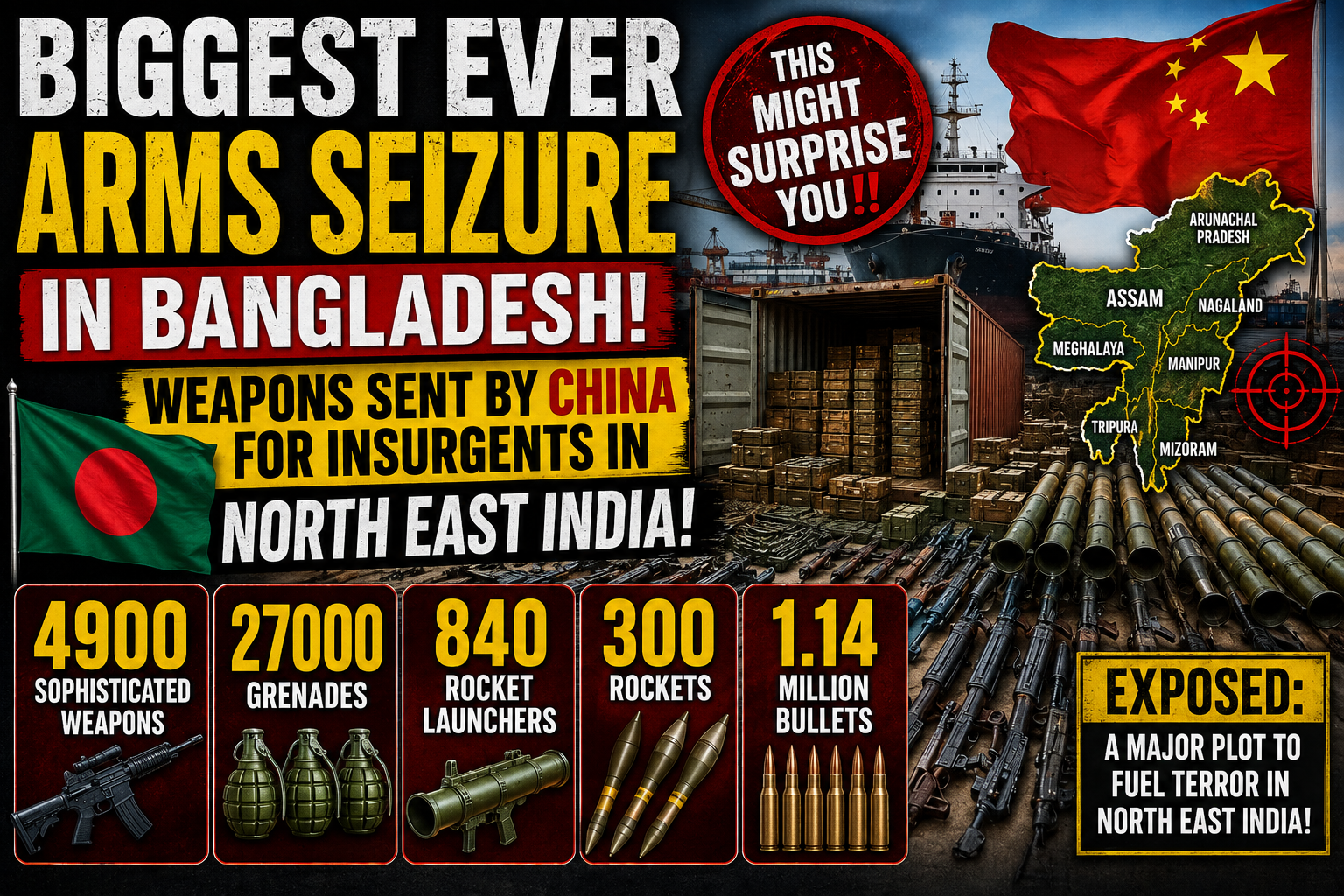
Authorities recovered an enormous cache, including:
- 4,930 sophisticated firearms
- 27,020 hand grenades
- 840 rocket launchers
- 300 rockets
- Approximately 1.14 million rounds of ammunition
The seizure remains the largest illegal arms recovery in Bangladesh’s history.
Weapons Allegedly Destined for ULFA
According to Bangladeshi court findings and investigation agencies, the consignment was allegedly intended for the United Liberation Front of Asom (ULFA), one of the largest insurgent organisations operating in India’s Northeast at the time.
Investigators concluded that the shipment was meant to strengthen militant capabilities in Assam and other northeastern states.
Chinese-Origin Weapons
Several investigations reported that many of the recovered weapons were of Chinese origin. While the arms were manufactured in China, there has been no official finding that the Chinese government authorised or directed the shipment. Reports instead focused on illicit trafficking networks that sourced Chinese-made weaponry for insurgent groups.
High-Profile Convictions
Following years of investigation, Bangladeshi courts convicted several senior officials and individuals linked to the smuggling operation in 2014.
Those convicted included:
- Former ministers in the Bangladesh Nationalist Party (BNP) government
- Senior intelligence officials
- Arms traffickers
- ULFA military chief Paresh Barua (tried in absentia)
The case exposed alleged collusion between militants, intelligence officials and organised criminal networks.
Impact on India’s Northeast
At the time, insurgent groups in Northeast India were actively involved in armed campaigns against the Indian state. The seizure prevented one of the largest known consignments of illegal weapons from reaching these organisations.
Security experts believe the interception significantly disrupted militant supply chains and marked a major success in regional counter-terrorism cooperation between India and Bangladesh.
Strategic Significance
The Chittagong arms haul remains a landmark case in South Asian security history, highlighting the scale of transnational arms trafficking networks and the importance of intelligence sharing between neighbouring countries in combating terrorism and insurgency.
More than two decades later, it continues to be cited as one of the most consequential counter-smuggling operations in the region.