
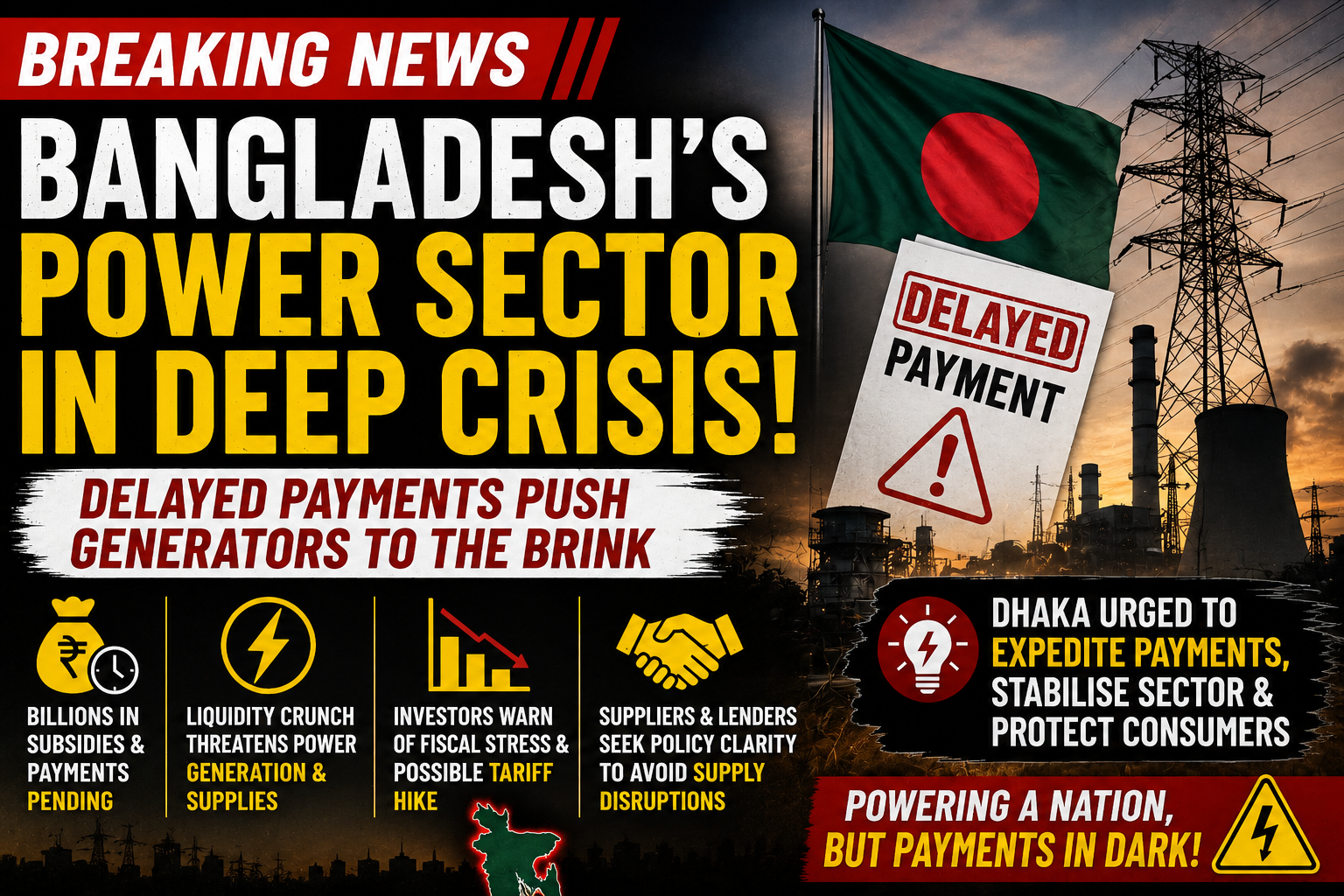
Dhaka, July 3: Bangladesh’s power sector is facing mounting financial pressure as delayed government payments to electricity producers have created a severe liquidity crunch, raising concerns over power generation, fuel supplies, and the long-term stability of the country’s energy sector.
According to recent reports, outstanding subsidy payments and delayed settlements have left several power producers struggling to meet operational expenses. The financial strain has affected their ability to procure fuel, service debt, and maintain regular electricity generation, increasing the risk of supply disruptions if the situation persists.
Liquidity Crunch Hits Power Producers
Independent Power Producers (IPPs), which contribute significantly to Bangladesh’s electricity generation, are reportedly among the hardest hit. With billions of taka in unpaid dues, many companies are facing cash flow shortages that are impacting day-to-day operations.
Industry officials have warned that prolonged payment delays could eventually force some power plants to reduce generation or temporarily suspend operations if financial obligations are not met.
Concerns Over Fuel Supply
The payment crisis is also affecting fuel procurement. Suppliers are reportedly becoming increasingly cautious about extending further credit, creating uncertainty over the availability of fuel needed to operate thermal power plants.
Any disruption in fuel supplies could further strain Bangladesh’s electricity grid, particularly during periods of high demand.
Investors Warn of Fiscal Risks
Energy sector experts and investors have cautioned that continued delays could undermine investor confidence in Bangladesh’s power sector. They argue that financial uncertainty may discourage future private investment in energy infrastructure and could increase borrowing costs for both the government and power companies.
Analysts also warn that if outstanding liabilities continue to accumulate, authorities may eventually be forced to revise electricity tariffs, potentially increasing costs for consumers.
Calls for Immediate Government Action
Policy experts and industry stakeholders have urged the Bangladesh government to expedite pending payments, clear outstanding dues, and introduce financial reforms aimed at improving the sustainability of the power sector.
They believe timely intervention is essential to restore confidence among investors, ensure uninterrupted electricity generation, and prevent broader disruptions to the country’s economy.
Critical Sector for Bangladesh’s Economy
Bangladesh has significantly expanded its power generation capacity over the past decade to support rapid industrialisation and economic growth. However, the sector remains heavily dependent on government subsidies and financial support.
The current payment crisis highlights the growing fiscal challenges facing the energy sector and underscores the need for structural reforms to ensure long-term financial sustainability.
While authorities continue to work on resolving the issue, energy experts warn that prompt policy decisions will be crucial to stabilise the sector, maintain reliable electricity supplies, and protect consumers from potential power shortages and higher tariffs in the future.