Three-day Table Top Exercise brings together maritime security experts to tackle terrorism, narcotics smuggling, human trafficking and illegal fishing across Indian Ocean Region
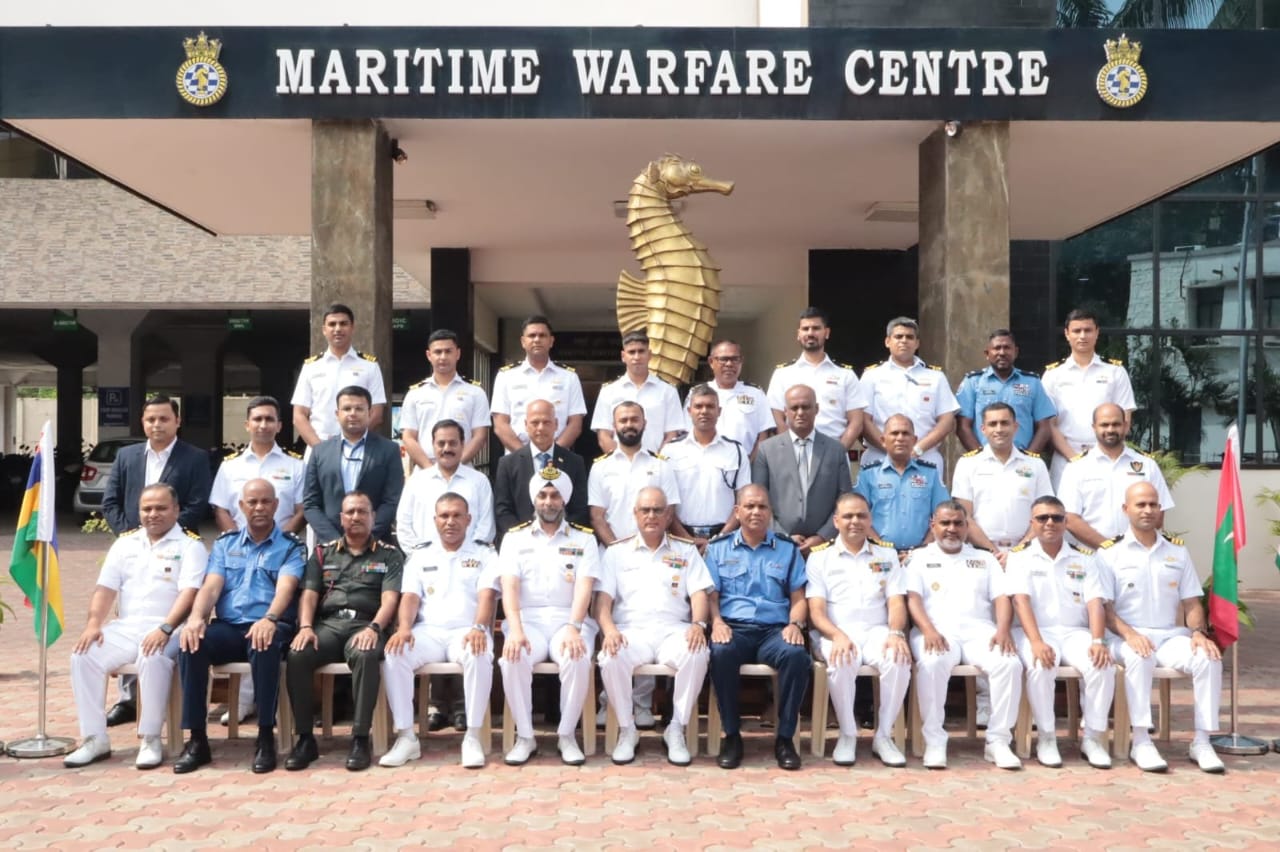
Visakhapatnam, September 12: A three-day Table Top Exercise (TTX) conducted under the aegis of the Colombo Security Conclave (CSC) concluded at the Eastern Naval Command (ENC) in Visakhapatnam on September 11, with participating nations focusing on strengthening a coordinated response to illicit maritime activities across the Indian Ocean Region.
The exercise, which began on September 9, brought together delegations and maritime security experts from CSC member states and observer nations for more than 72 hours of intensive simulated operational scenarios.
The exercise was centred on developing a “Coordinated Response to Illicit Maritime Activities in the Indian Ocean Region”, reflecting growing regional emphasis on information sharing, maritime domain awareness and coordinated action against non-traditional maritime threats.
Focus on Non-Traditional Maritime Threats
The simulated scenarios addressed a range of maritime security challenges that increasingly transcend national boundaries.
These included:
- Maritime terrorism
- Narcotics smuggling
- Human trafficking
- Illegal, Unreported and Unregulated (IUU) fishing
Such activities can involve multiple jurisdictions and maritime routes, making rapid information exchange and coordinated responses particularly important.
The exercise provided participating agencies an opportunity to work through hypothetical situations and examine how different maritime security institutions could respond collectively.
Strengthening Maritime Domain Awareness
A key focus of the exercise was improving Maritime Domain Awareness (MDA) — the ability to obtain, analyse and share information about activities taking place at sea.
Participants reviewed existing Standard Operating Procedures (SOPs) and examined information-sharing arrangements with the objective of making coordination more efficient during maritime security incidents.
Improved MDA can allow participating countries to develop a clearer picture of suspicious vessels, trafficking routes and other illicit activities operating across the region.
The exercise therefore focused not only on individual responses, but also on the mechanisms required to connect different agencies and countries during a developing maritime security situation.
Colombo Security Conclave’s Regional Role
The CSC has emerged as an important regional platform for cooperation among countries in the Indian Ocean.
The conclave focuses on areas including maritime security, counter-terrorism, disaster management and cybersecurity, bringing participating countries together to address common security challenges.
The latest Table Top Exercise provided an opportunity to test coordination mechanisms in a simulated environment without the complexities and risks associated with an actual maritime operation.
Such exercises can also help identify gaps in existing procedures and allow participating agencies to refine their approaches before responding to real-world incidents.
India’s Eastern Naval Command Hosts Exercise
The exercise was conducted under the aegis of the CSC at Eastern Naval Command, Visakhapatnam, one of the Indian Navy’s key operational commands on the eastern seaboard.
The opening address on September 9 was delivered by Rear Admiral Manoj Jha, Chief Staff Officer (Operations), Eastern Naval Command.
The exercise subsequently continued through a series of simulated scenarios and professional interactions involving maritime security experts from the participating countries.
The 72-plus-hour format allowed delegations to examine complex situations progressively and consider how information and operational responses could be coordinated across national boundaries.
Countering the Maritime Narcotics Threat
Narcotics trafficking was among the key challenges addressed during the exercise.
The Indian Ocean is an important maritime trade region and is also used by criminal networks involved in trafficking and other illicit activities.
Drug trafficking by sea can involve multiple stages — from sourcing and transportation to trans-shipment and distribution — often crossing several national jurisdictions.
The exercise’s emphasis on information sharing and coordinated maritime awareness is therefore aimed at improving the ability of regional partners to identify and respond to suspicious maritime activity.
Human Trafficking and Illegal Fishing
The exercise also addressed human trafficking, another transnational challenge requiring cooperation between maritime and law-enforcement agencies.
Similarly, IUU fishing can have economic, environmental and security implications. Illegal or unregulated fishing can undermine legitimate fishing communities, deplete marine resources and create enforcement challenges across maritime boundaries.
Including these issues in the exercise reflects the broader understanding that maritime security is no longer limited to conventional military threats.
Aligned With MAHASAGAR Vision
The exercise is also aligned with India’s MAHASAGAR vision — Mutual and Holistic Advancement for Security and Growth Across Regions.
The approach places maritime security within a broader framework of regional stability, economic growth and cooperation.
A secure maritime environment is essential for international trade, fisheries, energy flows and connectivity across the Indian Ocean.
By improving coordination among regional maritime security agencies, exercises such as the CSC TTX seek to contribute to a more resilient regional security architecture.
From Simulation to Operational Readiness
Table Top Exercises are designed primarily around decision-making, coordination and procedures rather than physical manoeuvres.
Participants are presented with simulated situations and required to work through questions such as how information should be shared, which agency should respond, how different countries coordinate and what existing SOPs need to be strengthened.
The lessons emerging from such exercises can subsequently contribute to improved operational preparedness.
In the case of the CSC exercise, the review of SOPs and information-sharing arrangements was particularly significant because illicit maritime activities often move rapidly across jurisdictional boundaries.
Collective Regional Response
The successful conclusion of the exercise reinforces the CSC’s emphasis on collective action against emerging maritime threats.
The Indian Ocean is home to some of the world’s most important commercial sea routes, making maritime stability critical to regional and global economic activity.
The participating countries’ engagement in simulated responses to terrorism, trafficking, narcotics and illegal fishing demonstrates the increasing importance of coordinated regional mechanisms rather than isolated national responses.
Key Takeaways
- Three-day CSC Table Top Exercise concluded at Eastern Naval Command, Visakhapatnam.
- Exercise began on September 9 and concluded on September 11, 2026.
- More than 72 hours of simulated operational scenarios were conducted.
- Focus: coordinated response to illicit maritime activities in the IOR.
- Scenarios included maritime terrorism, narcotics smuggling, human trafficking and IUU fishing.
- Participating delegations reviewed SOPs and information-sharing mechanisms.
- Exercise aimed to strengthen collective Maritime Domain Awareness.
- The exercise involved CSC member states and observer nations.
- Initiative is aligned with India’s MAHASAGAR vision.
**The conclusion of the exercise marks another step towards strengthening a coordinated maritime security framework in the Indian Ocean, with regional partners seeking faster information sharing, improved maritime awareness and more effective responses to common threats.**