Five-day HQ IDS programme brings senior military and civil officials together to deliberate on modern warfare, AI, cognitive warfare, strategic communication and national security
New Delhi, September 18, 2026:
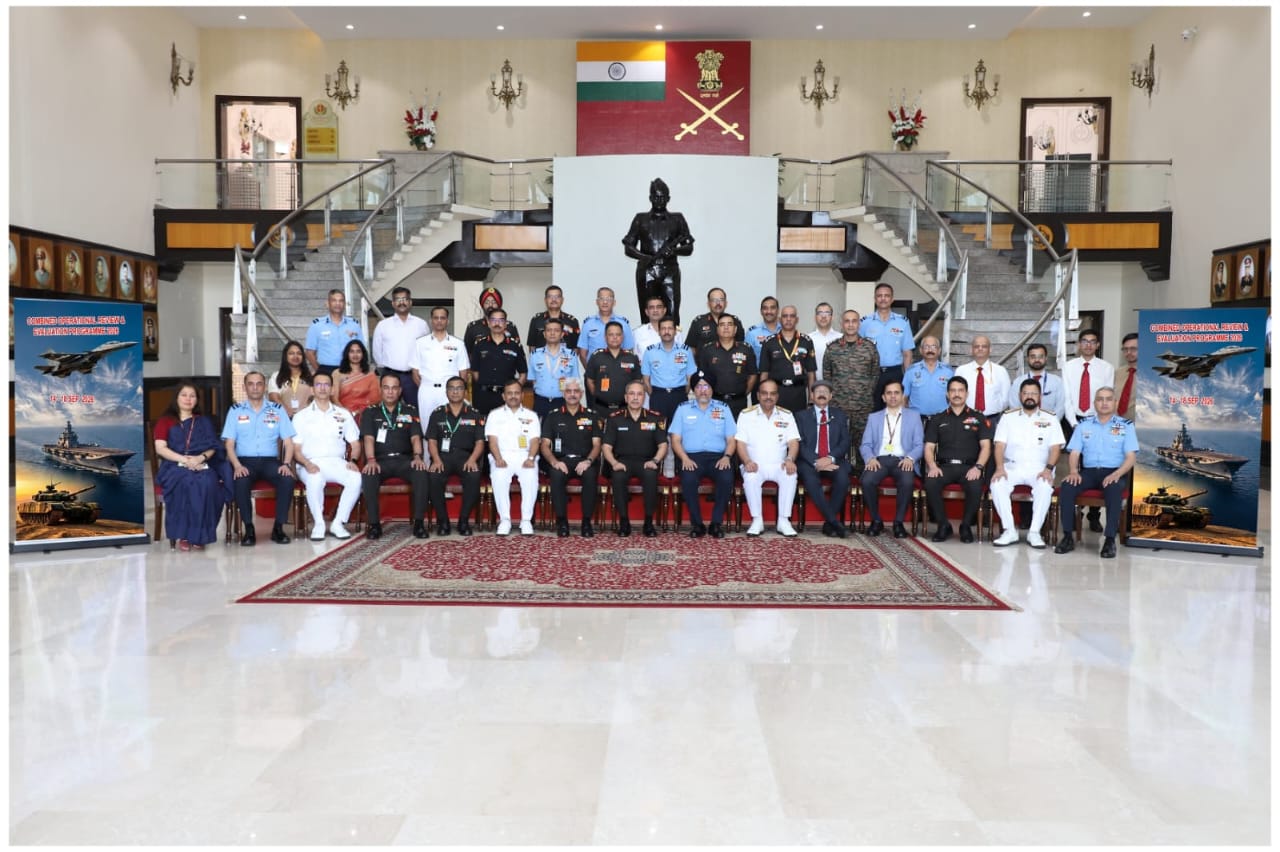
The Combined Operational Review and Evaluation (CORE) Programme 2026, organised by Headquarters Integrated Defence Staff (HQ IDS) and conducted by the Centre for Joint Warfare Studies (CENJOWS), concluded on Friday at the Manekshaw Centre in New Delhi.
The five-day programme, held from September 14 to 18, brought together senior officers from the three Services and officials from the Ministry of Defence, Ministry of External Affairs and Ministry of Home Affairs for detailed discussions on contemporary and emerging national security challenges.
The programme focused on strengthening jointness, inter-departmental coordination and integrated national responses amid the rapidly changing character of warfare and security challenges.
Focus on Changing Character of Warfare
The CORE Programme provided a platform for senior military and civil officials to exchange perspectives on a range of issues, including ongoing conflicts, modern warfighting concepts, non-kinetic dimensions of national security, defence production and capability development.
A major focus was placed on the growing role of emerging technologies in military operations and national security. Discussions covered technologies such as Artificial Intelligence, Robotics and Quantum Computing, along with their potential implications for future warfare and decision-making.
The programme also examined newer dimensions of conflict, including cognitive warfare, strategic communication and counter-disinformation operations.
Scenario-based exercises on cognitive warfare and strategic communication were conducted to provide participants with practical exposure to emerging challenges in the information and psychological domains.
Senior Military Leadership Engages with Participants
A significant feature of the programme was direct interaction between course participants and senior military leadership.
The Chief of Defence Staff, Chief of Naval Staff and Chief of Integrated Defence Staff (CISC) interacted with the participants and discussed contemporary issues concerning modern-day warfighting, apex-level decision-making and prevailing security challenges.
The Vice Chief of Air Staff and Vice Chief of Army Staff also engaged with the officers and shared their perspectives on contemporary operational and strategic issues.
The interactions provided participants an opportunity to understand the challenges involved in decision-making at senior levels and the importance of integrated planning across the armed forces.
Civil-Military Coordination at the Core
The programme brought together representatives from different arms of the government, highlighting the importance of coordination beyond the traditional military domain.
Officials from the Defence, External Affairs and Home Ministries participated alongside military officers, allowing discussions to incorporate military, diplomatic, internal security and broader national perspectives.
Subject Matter Experts, academics, think tanks and representatives from various government institutions also participated in the programme.
According to the Ministry of Defence, this diverse participation facilitated wider discussions on the changing nature of warfare and the requirement for coordinated national responses to emerging security challenges.
Emphasis on Whole-of-Nation Approach
The CORE Programme also sought to strengthen inter-departmental coordination and inter-agency jointness by bringing the Defence Forces, civil ministries and other key institutions together on a common platform.
The deliberations emphasised the importance of closer coordination across diplomatic, informational, economic and military domains.
The programme reinforced the concept of a Whole-of-Nation approach to national security, recognising that contemporary security challenges increasingly extend beyond conventional military threats.
The discussions also highlighted the need for different government institutions and stakeholders to work together in areas where military capabilities intersect with diplomacy, technology, information management, economic resilience and internal security.
Emerging Technologies and Information Warfare
With technological advances rapidly transforming military operations, emerging technologies formed an important component of the programme.
Artificial Intelligence, robotics and quantum technologies are increasingly influencing areas such as intelligence, surveillance, communications, autonomous systems, cyber capabilities and decision-making.
At the same time, discussions on cognitive warfare and counter-disinformation reflected the growing importance of the information environment in modern conflicts.
Strategic communication has emerged as an important component of national security as states increasingly seek to counter misinformation, influence narratives and maintain public confidence during crises.
The scenario-based exercises conducted during CORE 2026 provided participants with an opportunity to examine these challenges in an operational context.
Strengthening Jointness and Integrated Decision-Making
The conclusion of CORE 2026 comes amid continued efforts to enhance integration among India’s armed forces and strengthen coordination between military and civilian institutions.
The programme’s discussions on jointness, integration and modern warfighting underlined the importance of coordinated planning and decision-making across the Services.
The participation of senior officers and officials from multiple ministries also provided a broader framework for examining national security challenges from different institutional perspectives.
Key Takeaways
- Five-day CORE Programme 2026 concluded at Manekshaw Centre, New Delhi.
- Organised by HQ Integrated Defence Staff and conducted by CENJOWS.
- Senior officers from the three Services and officials from Defence, External Affairs and Home Ministries participated.
- Discussions covered jointness, integration, modern warfare and capability development.
- Emerging technologies including AI, robotics and quantum computing were examined.
- Focus on cognitive warfare, strategic communication and counter-disinformation.
- Senior military leadership interacted directly with course participants.
- Academia, think tanks, subject experts and government institutions also participated.
- Programme reinforced the importance of inter-agency coordination and a Whole-of-Nation approach.
The conclusion of the CORE Programme 2026 underlines the growing importance of integrated military-civilian planning as India prepares to address an increasingly complex security environment shaped by technological transformation, information warfare and multi-domain challenges.