
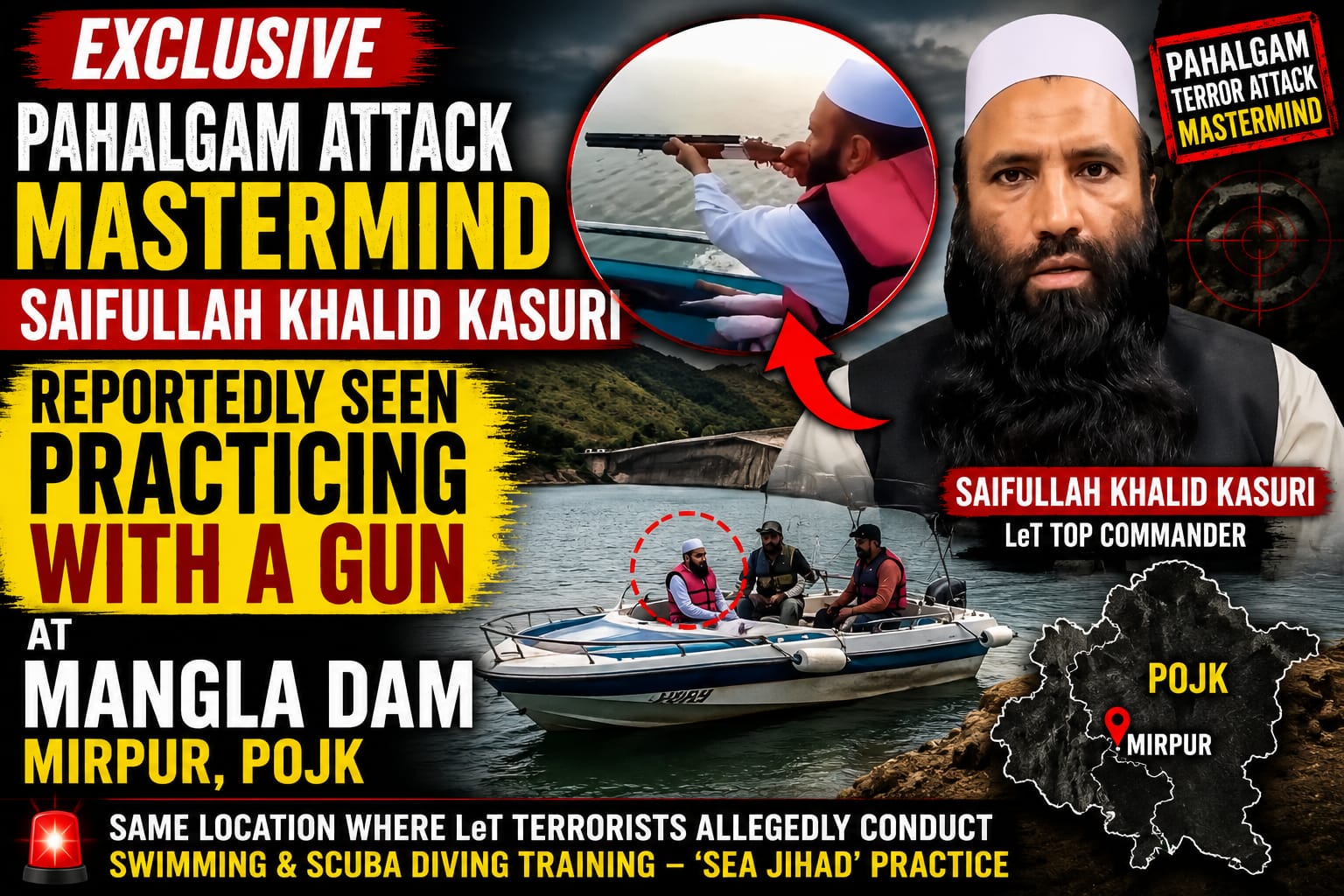
New Delhi, June 28: Exclusive visuals have reportedly surfaced showing Saifullah Khalid Kasuri, an individual Indian authorities have accused of being among the masterminds behind the Pahalgam terror attack, at Mangla Dam in Mirpur, Pakistan-occupied Jammu and Kashmir (PoJK). The footage purportedly shows Kasuri seated in a motorboat and appearing to practise firing a firearm in the reservoir area. The authenticity, date and exact circumstances of the footage have not been independently verified, and security agencies are examining the material.
According to sources familiar with the matter, the visuals have attracted the attention of Indian intelligence agencies because they allegedly place a key accused in a location that has previously figured in intelligence assessments relating to terrorist training activities.
Mangla Dam Once Again Under Security Scanner
Mangla Dam, situated in Mirpur in Pakistan-occupied Jammu and Kashmir, is one of the largest reservoirs in the region and occupies considerable strategic significance due to its vast water body, surrounding terrain and proximity to areas that have historically featured in intelligence reports concerning militant infrastructure.
Security agencies have, on several occasions, monitored activities around the reservoir amid concerns that water-based environments could be exploited for specialised militant training. Officials are now analysing whether the reported presence of Kasuri at the location indicates the continuation of such activities.
Earlier Intelligence Flagged Water-Based Training
The latest visuals come months after intelligence assessments reportedly suggested that operatives linked to the banned Lashkar-e-Taiba (LeT) had been conducting swimming, boating and scuba-diving exercises at Mangla Dam. Officials had expressed concerns that such training could be intended to improve the capability of militants to carry out infiltration, sabotage or other specialised operations involving water bodies.
Some intelligence officials had informally described these activities as part of what they referred to as “Sea Jihad” training. However, detailed official evidence regarding the full scope of those alleged activities has not been released publicly.
If the newly surfaced footage is authenticated, investigators will seek to determine whether the firearm practice shown in the visuals was connected to any organised militant training programme operating in the area.
Technical Examination of the Footage Underway
Sources said multiple intelligence and forensic agencies are examining the footage using digital forensic tools to establish its authenticity, identify the precise location, determine when it was recorded and verify the identity of those visible in the video.
Officials are expected to compare the visuals with satellite imagery, intercepted communications, previous surveillance inputs and other intelligence material to build a comprehensive assessment. Investigators are also analysing whether other individuals appearing in or around the footage have known links to terrorist organisations.
Focus on Terror Infrastructure Across the LoC
Indian security agencies have maintained heightened surveillance on terror launch pads, training camps and logistical infrastructure across the Line of Control following recent terrorist incidents in Jammu and Kashmir.
Officials believe that monitoring the movement of senior terrorist operatives provides valuable intelligence regarding recruitment, training patterns, operational planning and possible infiltration attempts. Intelligence agencies continue to monitor multiple locations believed to be associated with Pakistan-based terrorist organisations, particularly those operating in Pakistan-occupied Jammu and Kashmir.
Investigation Continues
Authorities have not yet issued an official statement confirming the authenticity of the purported visuals or commenting on the latest intelligence assessment. Security agencies are expected to complete a detailed technical examination before drawing any operational conclusions.
If verified, the footage could provide investigators with additional insights into the movements and activities of individuals accused in the Pahalgam terror attack and may contribute to ongoing intelligence efforts aimed at tracking militant networks operating across the Line of Control.