
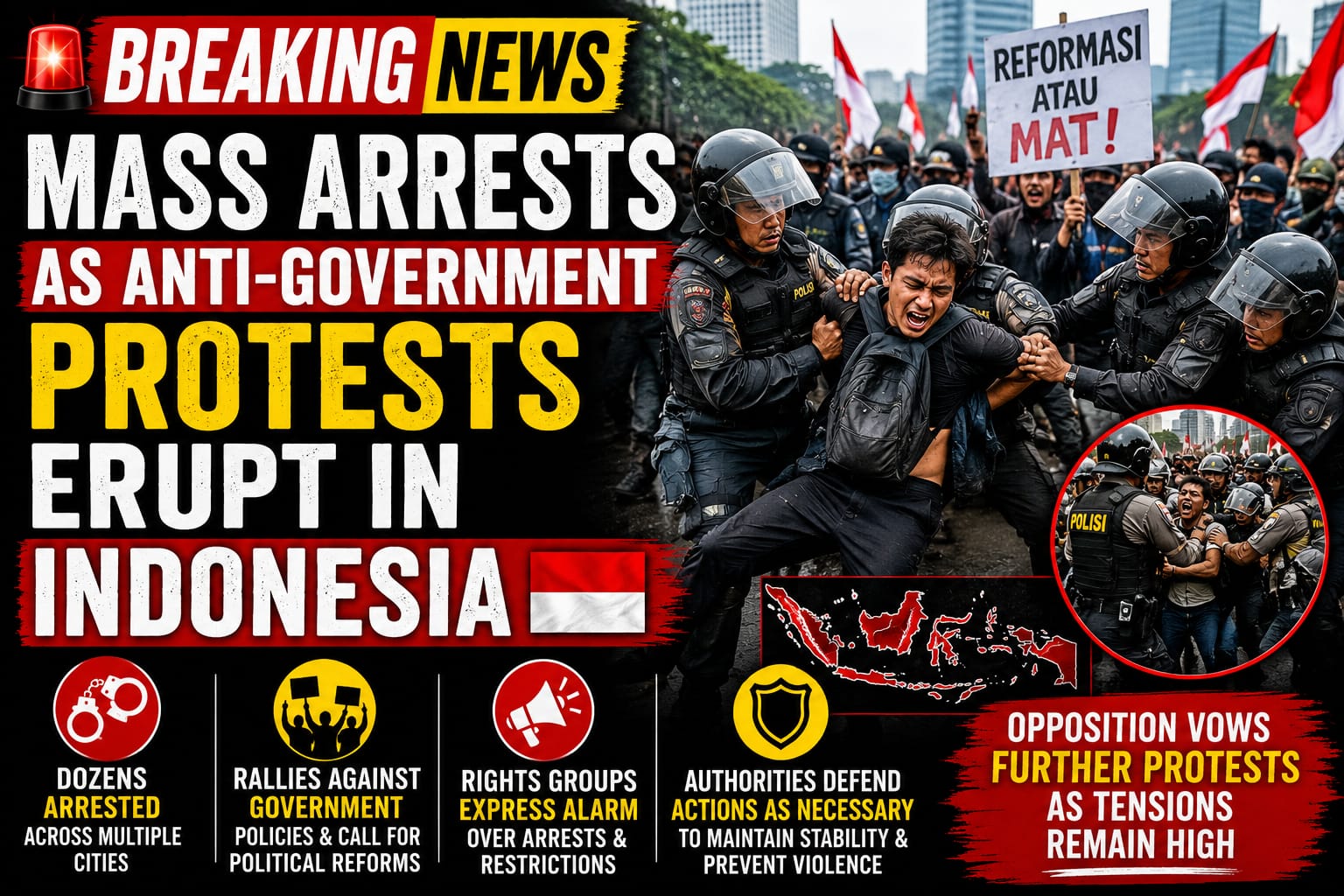
Jakarta, June 28: Indonesia witnessed a fresh wave of political unrest as security forces detained dozens of demonstrators during large-scale anti-government protests held across several cities. The demonstrations, organised by opposition groups, students and civil society organisations, were aimed at expressing dissatisfaction over government policies, economic concerns and demands for greater political reforms. The protests prompted a significant security deployment, with authorities citing the need to maintain public order and prevent violence.
Nationwide Demonstrations Draw Thousands
Thousands of protesters gathered in Jakarta and several other major cities, carrying banners and chanting slogans against the government. Demonstrators criticised a range of issues, including economic management, governance, rising living costs and what they described as shrinking democratic space. Student organisations, labour unions and opposition activists were among those participating in the coordinated nationwide rallies.
While many demonstrations remained peaceful, clashes reportedly broke out in some locations after protesters attempted to breach security barricades, prompting police intervention.
Dozens Arrested During Police Crackdown
Indonesian security forces detained dozens of protesters during the demonstrations, stating that the arrests were made to restore public order and prevent further escalation. Police deployed riot-control units, water cannons and additional personnel around key government buildings and public squares as crowds swelled throughout the day.
Authorities said some demonstrators allegedly violated restrictions on public gatherings and attempted to provoke unrest, leading to police action. Several detainees were later questioned, while investigations into protest-related incidents remain underway.
Protesters Demand Political Reforms
The demonstrations were driven by demands for greater government accountability, transparency and institutional reforms. Protest leaders accused the administration of failing to adequately address economic challenges, unemployment and governance issues while calling for stronger democratic safeguards and protection of civil liberties.
Opposition groups have vowed to continue peaceful demonstrations until their demands receive a meaningful response from the government.
Rights Groups Raise Concerns
Human rights organisations expressed concern over the scale of the arrests and urged authorities to respect the constitutional right to peaceful assembly. Rights advocates called for restraint by security forces and emphasised that peaceful protests are an essential component of a democratic society.
Several civil society groups also urged the government to engage in dialogue with demonstrators instead of relying solely on law enforcement measures to address political dissent.
Government Defends Security Measures
Government officials defended the police response, arguing that maintaining law and order remains a top priority. Authorities stated that while peaceful protests are permitted under Indonesian law, security agencies are obligated to intervene if demonstrations threaten public safety, damage property or disrupt essential services.
Officials maintained that security personnel acted within legal frameworks and sought to minimise confrontation while protecting both protesters and the general public.
Political Tensions Expected to Continue
The latest demonstrations highlight growing political tensions in Indonesia as opposition groups continue to mobilise against government policies. Analysts believe further protests are likely in the coming weeks, with organisers already announcing additional nationwide rallies and pursuing legal challenges related to the arrests.
The situation remains fluid, and observers will closely watch how the government balances public security with democratic freedoms as political pressure continues to mount across the country.